


 Contact us
 Visit CPRE.org
 Donate
Somerset Energy Park: our reasons for fighting this mega solar farm
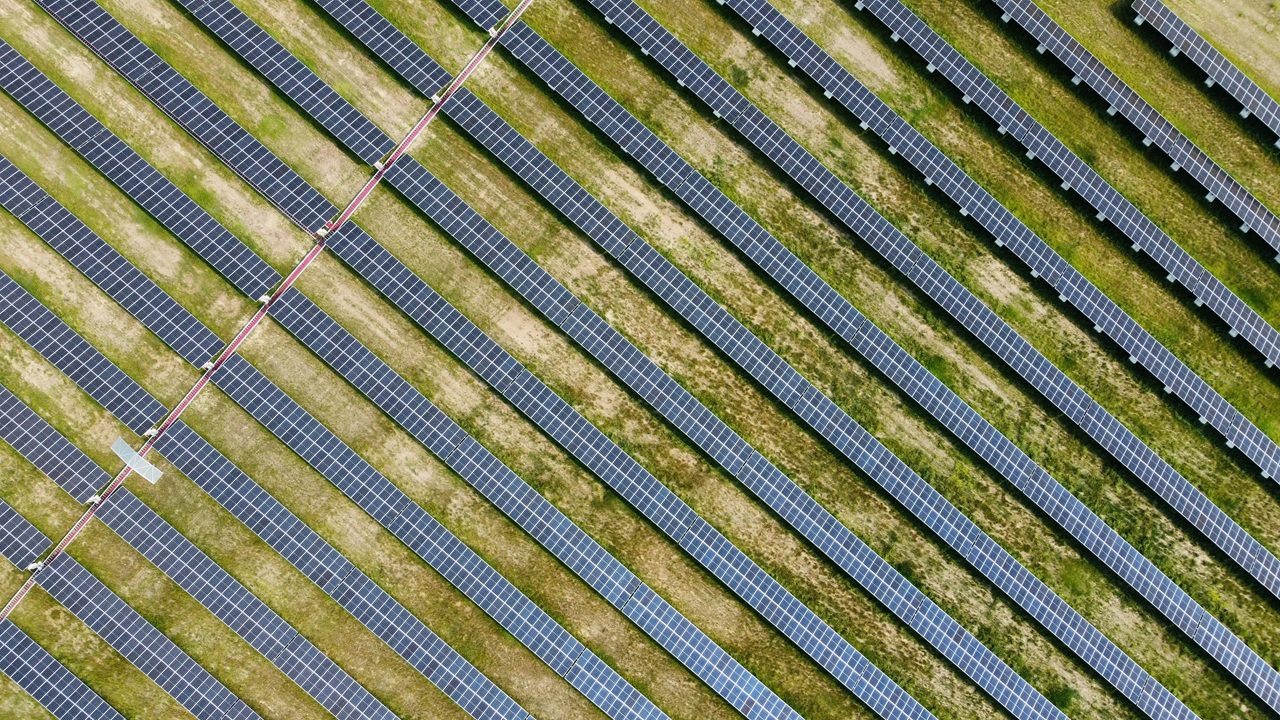
Plans have been revealed for a huge megasolar plant on the Somerset Levels. We believe climate action need not mean sacrificing irreplaceable priority habitats such as our precious Somerset wetlands. We will fight this horrific scheme.
Here is why we will be objecting to the Somerset Energy Park mega solar scheme:
It is massive
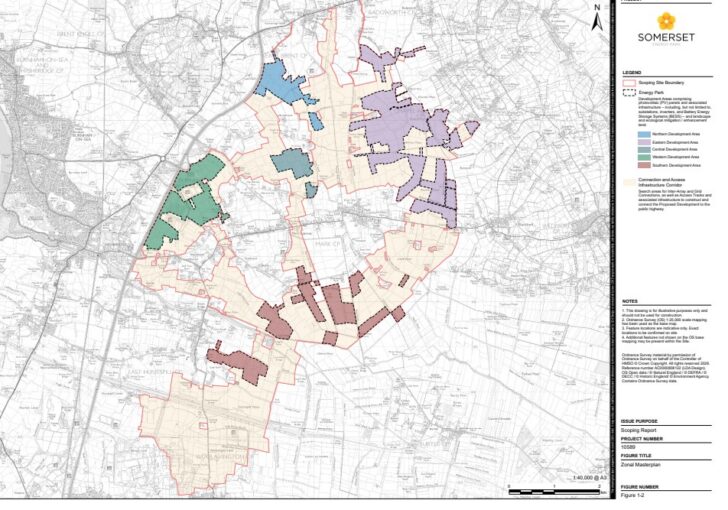
Currently the biggest operational solar farm in the UK is the 373Mw Cleve Hill in Kent. A 800Mw solar farm was approved at Sleaford, Lincs in April this year. The Somerset Energy Park is a 500Mw development. That means it is potentially the second largest one in the country.
It will industrialise the landscape
The red-lined development area would cover a huge swathe of moorland from the M5 at Brent Knoll eastwards almost to Wedmore, extending downwards almost as far as Woolavington. It will surround the village of Mark.
This rural landscape will become a sea of metal and glass, with battery storage systems, tens of thousands of ground mounted panels, inverters, industrial type security fencing and cameras on poles.
It will destroy important habitats for birds
The seven named moors inside the red lined area are integral parts of the Somerset Levels and Moors ecosystem. The designated ’Priority Habitats’ include ‘Coastal and Floodplain Grazing Marsh’, with pockets of ‘Purple Moor Grass’ and ‘Lowland Fens’
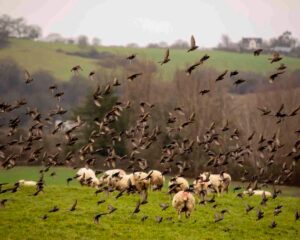
These ‘Priority Habitats’ are designated by Natural England to protect over-wintering migratory birds, which descend on the wetlands of Somerset from all directions, including the Arctic, Siberia, Scandinavia and Europe. They include:
- waterfowl – Whooper and Bewick Swans, Widgeon, Teal, Shoveller, Gadwall, Tufted Duck
- waders- Dunlin, Lapwing, Curlew, Snipe
- thrushes and songbirds- Starlings, Redwings and Fieldfares.
Some of the birds affected are Red listed (meaning they are of highest conservation concern). These include Curlew, Black tailed Godwit, Lapwing, Dunlin, Bewick’s Swan, Pochard, Woodcock, Starling, and Skylark.
It will impact rights of way
Imagine your favourite countryside walk changed overnight so you are now walking amongst metal and glass instread of wetlands and grasslands. This huge scheme, just by its enormous scale and size, will have a devastating impact on local rights of way.
It conflicts with planning policies
We believe that this scheme does not coply with various planning policies. Namely:
- policies in the National Planning Policy Framework 2026 which protect priority habitats and species (N1, N2);
- policies in Somerset Council’s own Local Nature Recovery Strategy published in March 2026;
- policies in the European Habitats Regulations regime, which was extended to Ramsar sites (internationally protected wetlands), by UK legislation in March 2026.
The Somerset Levels are a Ramsar Site and Special Protection Area (SPA). The Moors around Mark are ‘functionally linked land’ to the Ramsar Site, because the same birds use them.
Both categories of land are protected by the Habitats Regulations. Under these Regulations the ‘Precautionary Principle‘ applies. That means that the developer must prove it can exclude ‘adverse effects on site integrity’. There is a very limited number of exceptions allowed. Where priority habitat is involved (as it is here), the developer must prove that the scheme cannot be located anywhere else, and that there would be ‘beneficial consequences for the environment’.
In fact, the opposite is the case.
It is time for a moratorium on mega solar
Rolling out mega solar farms without proper regard for their landscape and irreplaceable habitat impact risks alienating many people who support climate action. The proposed Botley West mega solar farm in Oxfordshire was recently refused by the government, on landscape grounds among other reasons. So, there is some hope…
In 2027, the Government will publish its Strategic Spatial Energy Plan. This must be the blueprint to unlock renewable energy in the right places:
- small scale community led solar
- solar panels on homes, warehouses and car park canopies must be prioritised.
Until then we need a moratorium. No further solar farms over 30Mw should be given the go-ahead.
What happens now?
This project is at an early stage in the planning process. You can read more about the proposal on the Somerset Energy Park website
There is also currently a feedback form which you can access using the button below.
Tell the developers what you think
There will be a full public consultation in spring 2027. Once a planning application is submitted, the decision will be made, not here in Somerset, but by central government, because this is so large it is deemed to be a National Significant Infrastructure Project (NSIP). We are in touch with Parish Councils and local residents and we will work together to make sure local voices are heard as much as possible.
What can I do?
This is a real “David & Goliath” situation. We are a small, local charity and we need your help to fight this massive development.
Please consider becoming a CPRE Somerset member or making a donation.
Meanwhile, look out for updates on our social media pages and bookmark this page.


