

 Contact us
 Visit CPRE.org
 Donate
FAQs – Somerset Levels & National Park Status
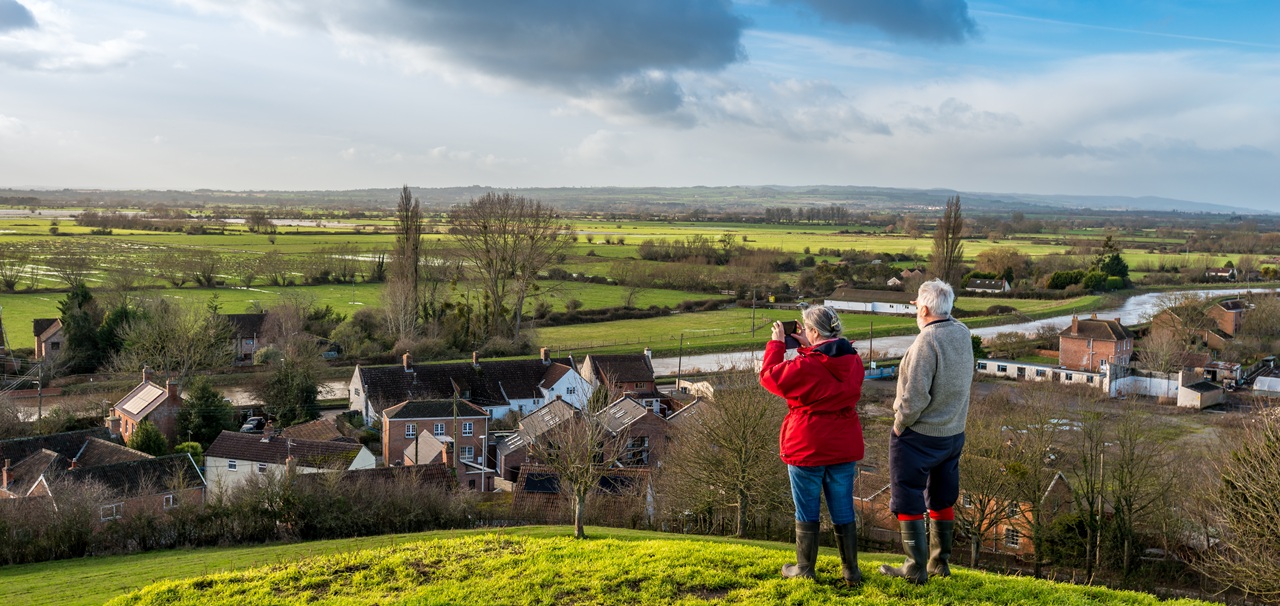
The idea of the Somerset Levels becoming a National Park raises lots of questions. We will try to answer some of them here…
What is a National Park?
National Parks were first created after World War II, after a long campaign for fairer access for all to the countryside, with a recognition that our special landscapes need protecting. They are defined as substantial tracts of land, sometimes remote, with wide open spaces large enough to provide the public with opportunities for outdoor recreation. National Parks are designated because of their landscape quality, wildlife and their values as a recreational resource.
The purposes of a National Park (as set out in the National Parks & Access to the Countryside Act, 1949) are
- To conserve and enhance its natural beauty, wildlife and cultural heritage, and
- To promote understanding and enjoyment of its special qualities by the public.
Where are the other National Parks?
There are 15 National Parks in the UK. 10 in England, 3 in Wales and 2 in Scotland. The first were created in 1951 and the most recent addition to the National Park family was the South Downs in 2010. This is when they were designated:
1951: Lake District, Dartmoor, Peak District, Eryri (Snowdonia)
1952: North York Moors, Pembrokeshire Coast
1954: Exmoor, Yorkshire Dales
1955: Northumberland
1957: Bannau Brycheiniog (Brecon Beacons)
1989: The Broads (designated under its Act of Parliament)
2002: Loch Lomond & the Trossachs
2003: Cairngorms
2005: New Forest
2010: South Downs
What does CPRE Somerset want to see?
We believe that the Somerset Levels has what it takes to become England’s next National Park.
It’s a brave idea but sometimes big dreams can become reality if we work together.
Natural England’s “Guidance for assessing landscapes for designation as National Parks orAreas of Outstanding Beauty in England” notes that both National Parks and National Landscapes must meet the test of natural beauty. This embraces such factors as landscape quality, scenic beauty, relative wildness and tranquillity, natural heritage and cultural heritage.
We believe the Somerset Levels will meet this test at all levels.
What is so special about the Somerset Levels?
We think the Somerset Levels is incredibly special. Here’s just a few of the things that make it special to us.
- the Somerset Levels is the LARGEST lowland wetland and grassland in the UK
- This is a landscape of unique beauty with its wide expanses of grasslands, wetlands, water courses and areas of peatland. It is a globally recognised landscape yet as a “landscape” it has no protection.
- Only 13% of the Somerset Levels is formally protected – and this is via wildlife designation. Even this does not guarantee “protection” as large parts are currently in an unfavourable condition for nature.
- The area has a special natural history, and a unique historical and cultural landscape with Glastonbury Tor at its heart and the ancient Sweet Track and Lake villages, a unique remnant of the neolithic past.
- The expanse of peatland provides a critical service for carbon capture (yet, shockingly, it is still being commercially dug today).
- Of all the National Parks in the UK, the Norfolk Broads is the only lowland/wetland landscape.
Those are the facts – but don’t just take it from us –
See what other people think about the Somerset Levels
What is the point of the Somerset Levels becoming a National Park?
Achieving National Park status for the Somerset Levels landscape would be amazing. It would generate positive spin-offs for nature, climate, heritage and livelihoods. It would bring joy, new opportunities and support to our communities and for our visitors.
National Parks provide a focus for recreation and tourism. 90 million visitors go to the existing National Parks and surrounding areas each year, spending more than £4bn. 90% of people say that National Parks are important to them. The Somerset Levels and Moors are surrounded by Bristol, Weston-Super-Mare, Bridgwater, Taunton, Yeovil and other smaller towns. National Park status would enhance opportunities for people’s recreation and enjoyment of the natural world.
Wouldn’t it be great to have a new National Park, here on the Somerset Levels?
Why does CPRE Somerset care about this?
CPRE has been campaigning for our countryside for 100 years. When we were formed, as the Council for the Preservation of Rural England in 1926, one of our main missions was to see the creation of new National Parks to protect our finest landscapes and allow access for ordinary people to our countryside. For a century, CPRE has spoken up for our countryside with people across the country and generations – from the creation of Green Belts and National Parks to protecting hedgerows, forests, dark skies and the places people cherish.
Watch our 100 years in 100 seconds video
Our history is proof that when the countryside needs a voice, people step up and make change happen.
But today, the land that sustains us faces growing and unprecedented pressures – from climate change and nature loss to decisions that lead to the needless loss of countryside. Our centenary vision is for a countryside that’s greener, more resilient and protected for future generations.
A special landscape like the Somerset Levels needs to function as a whole, underpinned by strategic land use and development planning and delivery. We need to recognise and care for Landscape and Beauty in its totality. While a significant area of the Levels is designated, significant other areas are not and that is where we are already, for example, facing the challenges of large solar farms and inappropriate housing developments. CPRE Somerset has helped local groups to successfully campaign against these, but new applications keep coming and the pressure is relentless. With National Park status, the Ad Hoc loss of parts of the Levels to development would be stopped. Having National Park protection will help to address existing issues such as phosphate pollution, soil erosion, flooding and loss of peat by bringing enhanced financial support through farming support schemes.
We believe that achieving National Park status for the Somerset Levels could bring more opportunities for partnership working of existing bodies who care for this landscape. It will mean more funding for regenerative farming schemes and opportunities for sustainable tourism, benefitting the environment, visitors and the local community.
It will raise awareness of this unique nationally important landscape.
What are the boundaries of the area you have in mind?
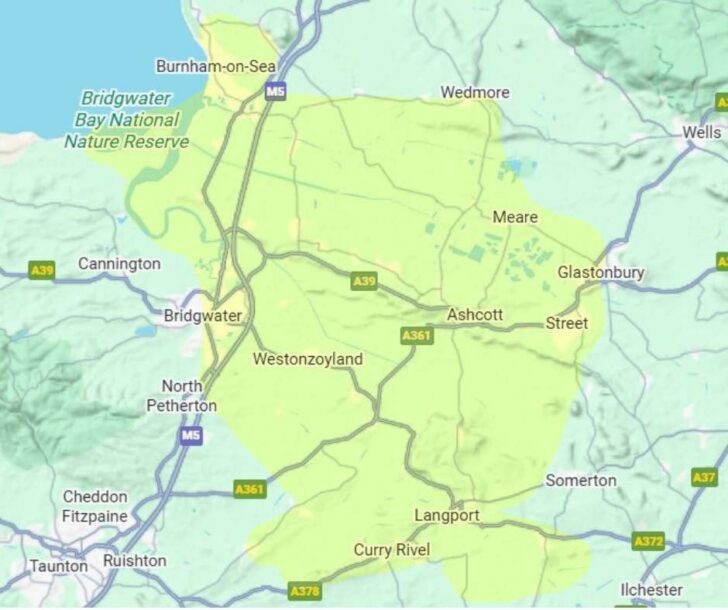
We have mapped out a very rough outline in the map below but this is just a very general starting point, based on the Landscape Character Areas described by Natural England. There would need to be a full assessment of the potential area as this campaign for a new National Park progresses, and public consultation, of course.
Who looks after National Parks?
Each National Park has its own National Park Authority funded by the government which are charged with the achieving the two purposes of National Parks. They are members of the local government family but are also independent, special purpose authorities established to act in the best interests of the National Parks and to encourage others to do the same. Unlike in many other countries, most of our land in National Parks is privately owned.
Who decides if this goes ahead?
National Parks in England are designated by Natural England based on landscape quality, wildlife, and recreational value, with a formal process involving proposals, consultation, and confirmation by the Secretary of State
How long might it take?
It’s a challenge! It could potentially take a number of years to get the Somerset Levels designated as a National Park. We are just at the very starting point, but we hope our “big idea” will gather momentum. We hope you will join us on this exciting journey.
How can I find out more about this campaign?
Thanks for your interest so far. To keep up to date with all our news, you can sign up for our CPRE Somerset newsletter, keep checking our website for updates and follow us on social media.
Tell us what you think
We have created a short questionnaire survey so you can tell us what the Somerset Levels means to YOU. It only takes a few minutes and we would love to hear from you! We will share the results later this summer.