

 Contact us
 Visit CPRE.org
 Donate
My Somerset Levels – ancient peatland & modern threat – by Anthony Lipmann
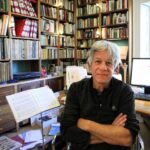
Anthony Lipmann has made the Levels his home. Here he shares his love of this wet and peaty landscape in all seasons – and his dismay at plans for a huge solar farm on nearby fields.
When, twenty years, ago this June, my wife and I came to live in Pedwell on the edge of the Levels – I had not ever heard of the word.
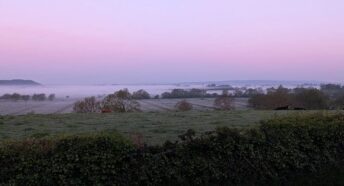
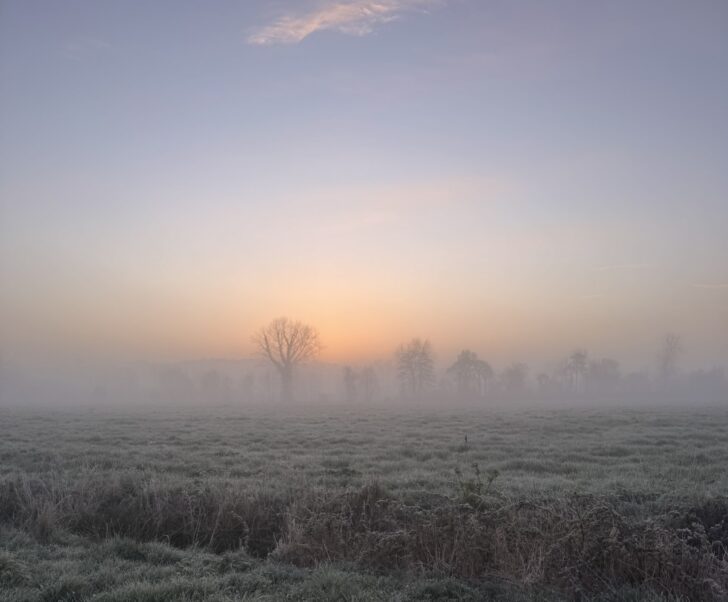
We had bought the house in the fog of a February morning – and we still joke that we never saw the top half until we moved in.
On that June day in 2006 when we arrived, a neighbour had left vegetables on our doorstep as a welcome. It was a sign of the love we have always been shown and the love of Levels that we wish to show in return.
I am a runner: so often being outside in the countryside, I came to know others who were out and about as I was – farmers, walkers, fellow runners, cyclists.
I remember deciding one morning I would walk to Cheddar in a sort of mad rite of passage. On my way I met a farmer somewhere between Godney and Fenny Castle (I was well off my route as you will note) and got talking to him as we waited for his cows to pass. ‘It must be difficult to find time to go abroad with your long hours’, I said by way of conversation. ‘Yes, he replied, I only went overseas once, which was to America’. ‘That must have been wonderful’, I said ‘what did you see?’ ‘I went over to see some cows’, he said.
I was beginning to learn about the closeness and attachment to the land that comes with living here.
I am not a farmer, but I have come to know many.
Some who have espoused every modern aid – such as robotic self-milking, individual cow tracking by APP. Others…knee-deep in slurry and rural poverty, overburdened by the stress of costly red-tape and low supermarket prices for their milk. At the same time, I have met those who don’t really have the yen to farm at all, who saw the idea of installing solar panels on their land as a route to a more relaxed way of life.
Who am I to be judge?
But my time here has shown me that you can be an incomer and still have a say.
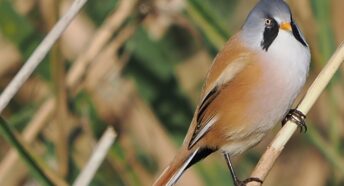
I saw for myself the kestrel, marsh harrier, lapwing, egret, barn owl hunting at dusk, the pipistrelle and noctule bats emerging from the derelict barn on Butleigh Drove, and – a couple of years ago on a icy February morning – the common cranes (introduced in 2014), staking out their territory.
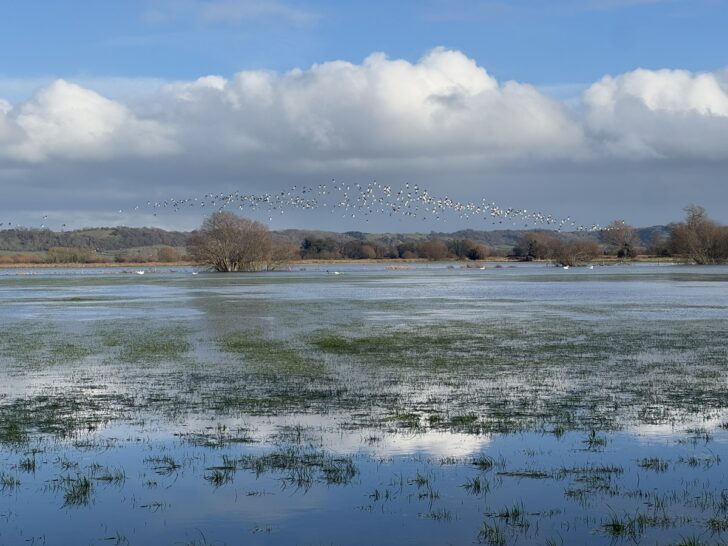
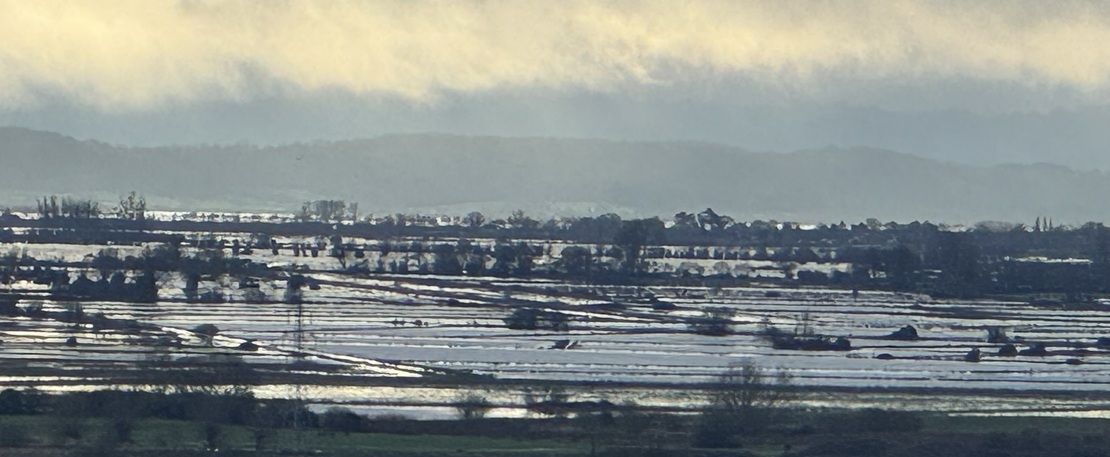
I have seen the floods of 2011 and 2014 that turned the finger of road between Pedwell and High Ham into a causeway with waves lapping on either side. I have come to know the faintly effete cry of the buzzard (always in a pair). I have welcomed the house martins every year at the eaves of our neighbours’ house and wished we had them too. I have listened to the tawny owls at night and I have seen country fox cubs lurking behind the old barn (so different to their urban cousins).
Solar farm application
So naturally when our entire area was threatened by the application for a 340-acre industrial solar complex within walking distance from my house, my heart ached. It ached – not for myself – but for the Levels. It ached for this unique landscape built by nature and our bronze-age forbears and the Romans over centuries. First our bronze age cousins who hunted and fouled, who watched the setting sun from what is now called Pedwell Hill. This, followed by centuries of healthy reedbeds, turning brackish water to fresh, dying and held under water thus capturing carbon, and accumulating as peat at the rate of 1mm per year.
Yes, here next to Pedwell, our peatlands on the moor are classified as ‘deep peat’ (30-50 cm). Today the black earth is relatively lifeless. Instead of retaining carbon, farmers liberate it as the soil is turned over. But it is also an opportunity: less than three miles from here, the Somerset Wildlife Trust has purchased a farm called Honeygar as a research centre for the re-seeding of sphagnum moss to see if the process for carbon capture can be reinstated here.
If, therefore, CPRE Somerset is successful in its campaign to have the Levels designated a National Park, the hope is that, instead of colonising these ancient lands with silicon manufactured in China via carbon emitting processes, this peat wonderland could quietly do the opposite – capture and retain carbon.
It is for this reason that I am passionately in favour of CPRE Somerset’s campaign, which has the chance to save the unique ancient beauty of this landscape and the creatures that live therein.